Reference Materials for Biological Testing of Medical Devices (RMs and Their Characteristics)
Share to
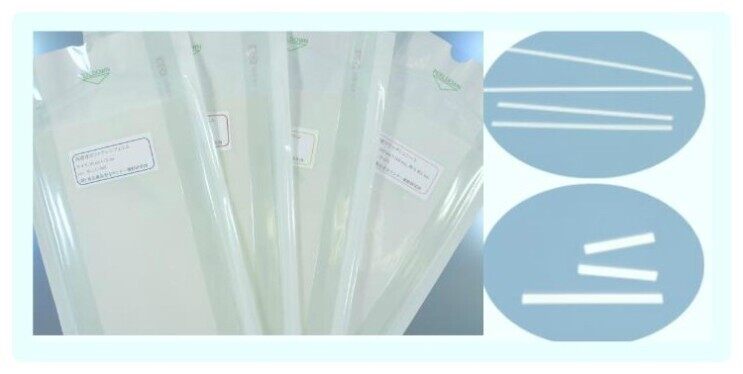
RM-A, RM-B, RM-C, RM-D, RM-E, RM-H, RM-F, Y-3, Y-4 [Hatano, FDSC]
Reference Materials (RMs) for biological testing of medical devices
The RM series control plastic films, jointly developed by the FDSC (Food and Drug Safety Center) and the Hatano Research Institute, are widely used reference materials in biological evaluation of medical devices. These RMs are included in the revised draft of Japan's Basic Guidelines for Biological Testing of Medical Devices (MHLW Japan) and the ISO 10993 series.
The RM series consists of standardized reference materials used to verify the reliability and sensitivity of biocompatibility test systems, categorized into positive and negative controls.
Cytotoxicity Assay (as positive and negative control materials)
Muscle implant testing (as positive and negative control materials)
Bone graft testing (as negative control material)
Hemolysis Test (as Positive Control Material)
In vitro skin irritation test (as positive control material)
If using sterilized RM in testing, sterilize via autoclave (121°C for 15 minutes) or ethylene oxide gas (EOG).
For cytotoxicity testing
Positive RM is a certified material with a specified cytotoxicity level.
Model | Type | Primary Material | Specifications | Sterilization Status |
RM-A | Positive Control | Polyurethane film + 0.1% ZDEC | 0.5mm thick, 100×150mm/ pcs | Unsterilized |
RM-B | Positive Control | Polyurethane film + 0.25% ZDBC | 0.5mm thick, 100×150mm/ pcs | Unsterilized |
Negative RM is used for extract testing in CFA (Colony Forming Assay) cultures. Cytotoxicity has been assessed via CFA and showed no reaction.
Model | Type | Primary Material | Specifications | Sterilization Status |
RM-C | Negative control | High-Density Polyethylene (HDPE) Film | 0.5mm thick, 30×100mm/ pcs | Unsterilized |
After cutting the RM, sterilize using either steam under pressure (121°C for 15 minutes) or ethylene oxide gas (EOG). When using steam sterilization, separate any attached RMs before sterilizing to prevent them from fusing together. Avoid excessive sterilization conditions (temperature and/or duration) to minimize the risk of adhesion. If using EOG sterilization, allow adequate aeration due to the toxicity of the gas. The RM should be sterilized only once; repeated sterilization may cause degradation.
For short-term implantation testing
Short-term muscle implant test
Bone graft for rabbits
A negative RM is a certified material that does not produce any positive results.
Model | Type | Primary Material | Specifications | Sterilization Status |
RM-D | Negative control | High-Density Polyethylene (HDPE) Sheet | 1mm thick, 50 × 100mm/ pieces | Unsterilized |
RM-E | Negative control | High-Density Polyethylene Rod | Diameter 1 x 100 mm | Unsterilized |
RM-H | Negative control | High-Density Polyethylene Rod | Diameter 2 x 100 mm | Unsterilized |
Positive RM is a certified material that delivers positive results in short-term muscle implants.
Model | Type | Primary Material | Specifications | Sterilization Status |
RM-F | Positive Control | Polyurethane film + 0.75% ZDEC | 1mm thick, 20×50mm/piece | Unsterilized |
For hemolysis testing
Positive RM
Y-3 is a positive control material for the hemolysis test, as specified in Japanese testing guidelines.
Model | Type | Primary Material | Specifications | Sterilization Status |
Y-3 | Positive Control | PVC pellets containing 0.91% nonionic surfactant (Y-3) | 100g | Unsterilized |
For in vitro stimulation testing
Positive RM
Y-4 is a positive control material that yields a positive result in the in vitro skin irritation test, in accordance with Japanese testing guidelines and ISO 10993-23.
Model | Type | Primary Material | Specifications | Sterilization Status |
Y-4 | Positive Control | PVC pellets containing 5.8% nonionic surfactant (Y-4) | 100g | Unsterilized |